Most new bloggers wait too long to start an email list.
They tell themselves they will do it after traffic shows up.
That’s backwards.
A zero-dollar email funnel gives each visitor a next step, even if your blog is tiny.
No ads.
No paid software.
No fancy setup.
Just a free offer, a signup form, a thank-you page, and a short email sequence.
If you can publish a blog post, you can build this system too.
Start small, keep it plain, and let it grow while you keep writing.
Why a Zero-Cost Email Funnel Matters Before Your Traffic Grows
A new blog usually has a traffic problem and an attention problem.
You might get a few visits from search, a couple from Pinterest, and maybe some clicks from social media.
Then those people leave, and that’s it.
Unless you give them a reason to stay in your orbit.
Email fixes that.
Think of your blog like a small shop on a quiet street.
A visitor walking in is nice.
A visitor who gives you permission to contact them again is better.
That’s what a zero-dollar funnel does.
It turns one visit into a second chance.

This matters even more if your blog is in a crowded space.
Think affiliate marketing, digital marketing, online income ideas, side hustle success, remote work, or freelancing.
Those readers are comparing options fast.
If they leave without joining your list, you may never see them again.
Email also gives you control.
Social platforms can change reach overnight.
Search traffic can swing.
Your list is still yours.
If you’re starting at zero, this guide on getting your first email subscribers is worth reading after this one.
It fills in the beginner basics without making the whole thing feel bigger than it is.
A small list that trusts you beats a big audience that forgets you.
That’s the mindset shift.
You are not trying to build a giant machine on day one.
You’re building a simple path that catches attention and turns it into a relationship.
The Simple Setup: Four Parts and One Free Tool
Let’s keep this lean.
A zero-cost funnel for a new blog only needs four parts.
- A place to subscribe, either an embedded form or a basic landing page.
- A free offer that solves one small problem.
- A thank-you page that tells people what to do next.
- A short email sequence that starts the relationship.
That’s it.

For the tool itself, free email platforms are better than they used to be.
As of 2026, AWeber is still the easiest pick for most beginners.
Brevo, Mailchimp, GetResponse, and Sender also have free plans that work for a starter setup.
If you want the easiest path, pick one and move on.
Don’t spend three days comparing menus.
A lot of beginners get stuck here because they think “funnel” means a stack of pages, popups, timers, and split tests.
It doesn’t.
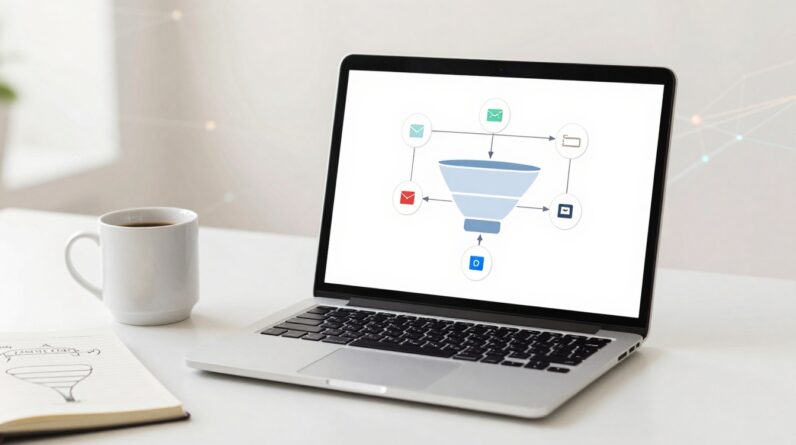
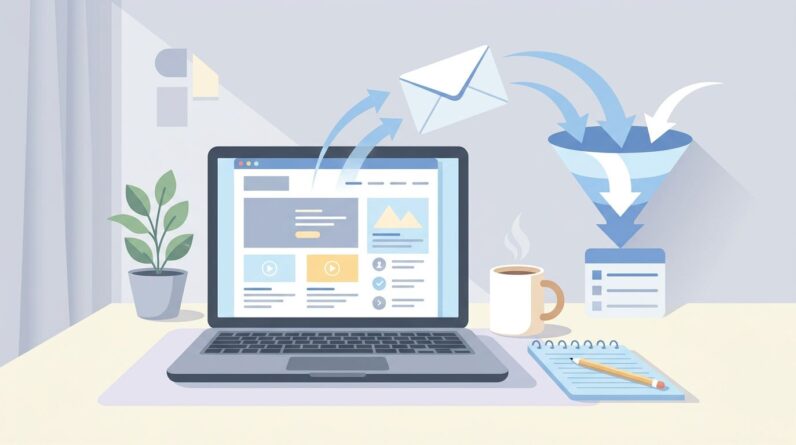
At this stage, a funnel is simply a path:
Visitor reads post -> visitor joins list -> visitor gets help -> visitor hears from you again.
Your sign-up point can live inside a blog post.
Your free offer can be a PDF, checklist, short guide, swipe file, or mini-email course.
Your thank-you page can be one plain page with a short message.
Your welcome sequence can be five short emails.
That’s why this works on a zero-dollar budget.
Many free email tools already include forms, landing pages, and basic automations.
You do not need a paid funnel builder to get moving.
If you want another plain-English example of how the structure works, this free sales funnel blueprint shows the same bones.
The big mistake is building too much.
One form, one offer, one sequence.
That is enough for version one.
Write the Freebie and Emails Before You Touch Design
Most opt-in offers flop for one reason.
They try to do too much.
A good freebie solves one problem fast.
It does not need to be long.
It needs to be useful.
If your blog is about affiliate marketing, a one-page checklist for choosing a first offer works.
If you write about digital marketing, a simple content calendar template is better than a 40-page ebook.
For online income ideas, you could offer a quick filter sheet that helps readers pick the model that fits their time and skills.
For remote work or freelancing, a client outreach script or job application tracker makes sense.
Short wins convert.
Your freebie does not need to impress people. It needs to help them get one small result.
Once the offer is clear, write your first five emails.
Keep them short.
Keep them human.
Keep them tied to the promise that got the signup.
A simple sequence can look like this:
- Email one delivers the freebie and gives one quick tip to use it.
- Email two shares your story or point of view, so readers know who you are.
- Email three teaches one useful lesson tied to the freebie.
- Email four points readers to a strong blog post or helpful resource.
- Email five asks for a reply, or gently points to a product, service, or affiliate recommendation if it fits.
That last part matters.
A new blog does not need to hard-sell.
It needs to build trust and train readers to open your emails.
Sales can come later.
If you want a stronger next step after your welcome emails, this guide on building a high-converting email funnel can help you expand the system without making it messy.
Also, write your emails before you fuss over colors, fonts, or layout.
Readers join for the result, not the button shade.
Clean beats clever here, every time.
Put the Funnel Where Readers Already Pay Attention
A funnel nobody sees is not a funnel.
It’s a file sitting on your laptop.
So where should your opt-in go?
Start with the pages that already get attention.
Add the form near the top of your best post, in the middle of the article where the topic matches the freebie, and again near the end.
That is usually enough.
You don’t need to paste the same box on every inch of your site.
Context matters more than volume.
If a post is about starting a blog, offer a beginner checklist.
If a post is about side hustle success, offer a weekly planning sheet.
If a post is about remote work, offer a work-from-home setup checklist.
The closer the offer matches the post, the better your conversion odds.
A simple About page signup can work too.
So can a short callout at the end of each article.
What you want is a pattern readers can follow without friction.
If you want extra examples, this step-by-step email list guide for bloggers has solid placement ideas for beginners.
After that, track only a few numbers:
- How many people see the offer
- How many join
- How many open the first email
- How many click or reply

That’s enough data to improve the right thing.
If people visit but do not subscribe, your offer or placement is weak.
If they subscribe but ignore the first email, your subject line or promise needs work.
If they open but never click, the content is too vague or the call to action is too soft.
Small lists are deceptive in a good way.
Fifty subscribers can teach you a lot.
One hundred engaged readers can send traffic, replies, and even early sales.
That is plenty for a new blog.
Start Small and Let Your Zero-Dollar Email Funnel Compound
Waiting for more traffic first feels safe.
It usually keeps people stuck.
A zero-dollar email funnel works because it is small enough to finish.
Pick one free platform.
Make one useful freebie.
Write five short emails.
Put the form inside the posts people already read.
Then leave it alone long enough to learn from it.
A simple system you publish this week will beat a “perfect” one that stays in draft mode for another month.