One tiny “#ad” can be the difference between a transparent TikTok post and a promotion that leaves viewers guessing.
The FTC affiliate disclosure rules are not about making your content sound stiff or legal.
They are about telling people, clearly and early, when you could earn money or receive something of value because of a recommendation.
Affiliate marketing can be one of the more practical online income ideas, but trust is the part that compounds. Start there.
FTC Affiliate Disclosure Rules: What TikTok Creators Must Disclose
As of August 2026, the FTC’s framework still comes down to two ideas: a material connection and a disclosure that is clear and conspicuous.
A material connection is any relationship with a brand that could change how viewers judge your recommendation.
A commission from an affiliate link counts.
So does payment, a free product, a discount, an employee relationship, a family tie, or a free trip.
The FTC’s influencer disclosure brochure puts it in plain language: viewers should be able to tell when your endorsement is connected to a brand relationship.
Say a skincare company sends you a $60 serum to test.
You post a glowing review and link to the product in your bio.
Even if the company never paid you cash, that free product can be a material connection.
If someone would feel differently about your recommendation after learning you earn a commission or got the product free, disclose it.
This applies to a casual “my current favorite” post as much as a polished campaign.
TikTok’s quick pace doesn’t lower the standard.
If the endorsement is part of your digital marketing plan, the disclosure needs to keep pace with the pitch.

The FTC’s Endorsement Guides were updated in 2023, and no new primary FTC rule has replaced this standard for 2026.
A helpful breakdown of the updated endorsement guidance shows why vague labels and hidden disclosures are a weak bet.
Put the Disclosure Where People Will See It
A caption disclosure buried after a wall of hashtags doesn’t cut it.
Neither does a disclosure placed in your bio, a pinned comment, or the final second of a 45-second video.
For TikTok affiliate content, use a disclosure in the video itself.
Put it near the start, keep it large enough to read, and leave it on-screen long enough for a normal viewer to catch it.
If you are speaking in the video, say it out loud too.
A strong opening can sound natural:
“I bought this myself, but that link in my bio is an affiliate link.
I may earn a commission if you buy.”
Or:
“This video is sponsored by the brand, and they sent me this product to test.”
The words do not need legal drama.
They need to be understood.
“#ad,” “#sponsored,” “paid partnership,” and “affiliate link” are direct options.
Phrases such as “#sp,” “#partner,” “collab,” or “ambassador” can be unclear to a viewer scrolling fast.
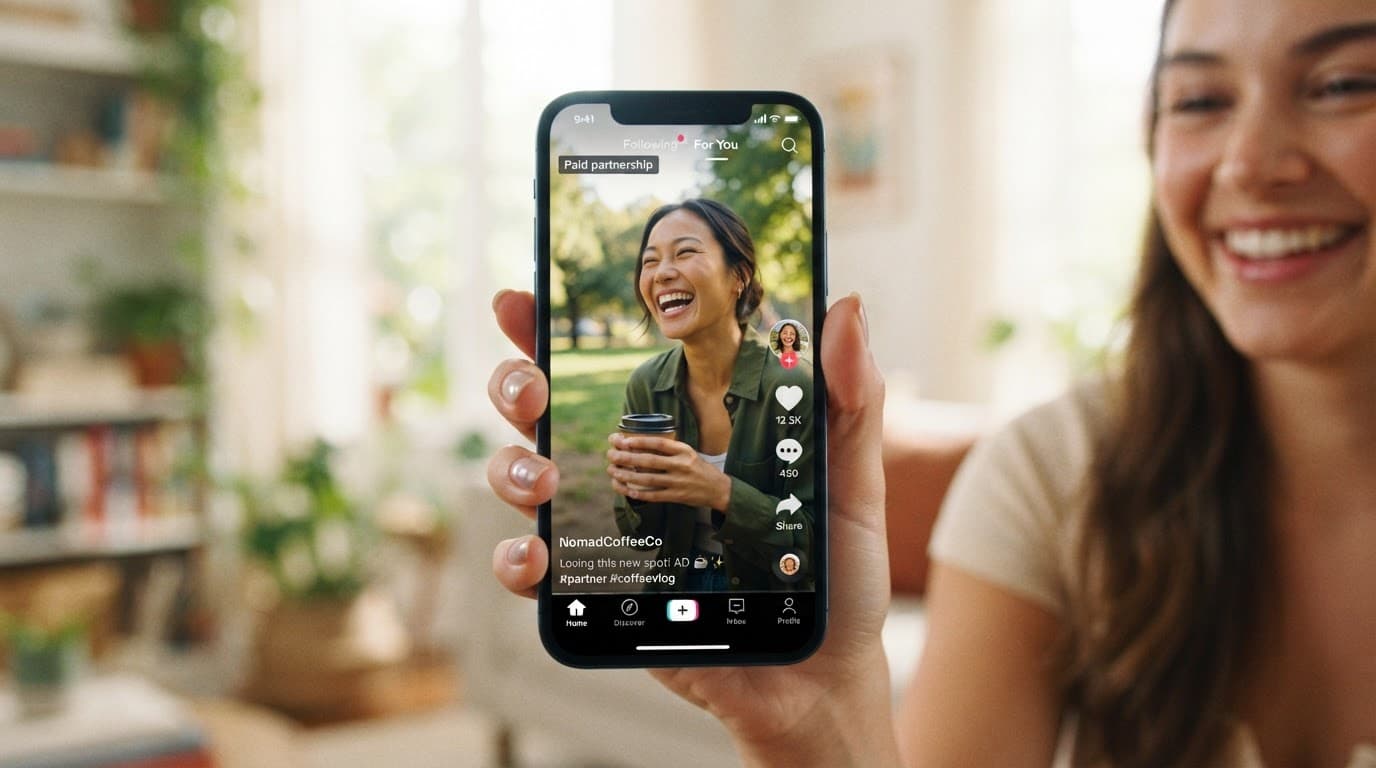
TikTok’s content disclosure setting is useful when you post branded content.
Turn it on when it fits your arrangement.
Still, don’t treat the platform label as your entire disclosure plan.
The FTC has said built-in platform tools may not be enough on their own.
Use the label, add clear video text, and mention the connection in your spoken audio or caption.
Three simple signals beat one easy-to-miss signal.
For more plug-in language that does not feel awkward, use this affiliate disclosure wording guide.
The goal is clarity before the viewer taps your bio link.
Match Your Disclosure to the Promotion
Different TikTok posts need different wording.
The relationship is what matters, not the format.
If you earn commission through Amazon Associates, LTK, Impact, ShareASale, or a brand’s own program, say “affiliate link” or explain that you may earn a commission.
If a brand paid you a flat fee, say the post is sponsored or paid.
Here are a few clean examples:
- “Affiliate link in bio. I may earn a commission if you purchase through it.”
- “Paid partnership with this brand. They sent the product and paid me for this video.”
- “Gifted by the brand. I was not paid, but they sent this item for review.”
- “My friend owns this company, and I earn a commission on sales from my link.”
Be careful with “gifted.”
If you received a product and also earn commission, say both.
A viewer should not have to guess which relationship applies.
For TikTok Shop content, the same rule applies.
A product tag or commission notice can help, yet your own disclosure should still be hard to miss.
Your audience may see the video before they notice any shopping label.
This is also why people pursuing side hustle success through remote work or freelancing should treat disclosures as part of the job.
A short sentence can protect more than a long apology later.
Your Claims Must Be Honest, Too
Disclosure does not give you a pass to make claims you cannot support.
If you did not use the product, don’t say you did.
If your results are unusual, don’t present them as typical.
If a supplement “helped me sleep,” that is different from claiming it treats insomnia.
The FTC’s endorsement and review guidance also covers deceptive reviews.
Do not edit out legitimate negative feedback for a brand, post a review you did not write, or pretend a paid testimonial came from an ordinary buyer.
Keep your recommendation inside your real experience.
You can say a laptop’s battery lasted through your workday if that happened.
You should not claim it lasts 18 hours for everyone unless the brand can back that up.
A good disclosure makes the relationship visible.
Honest claims make the recommendation believable.
You need both.
Build a Fast Pre-Post Disclosure Check
The easiest way to stay consistent is to make disclosure part of your posting routine.
Do it before the video goes live, not after a comment calls it out.
Before posting a TikTok affiliate video, run through these five questions:
- Did I receive money, commission, a product, a discount, or another perk from this brand?
- Is my disclosure visible near the beginning of the video?
- Would a viewer understand the disclosure without reading my bio or opening a caption?
- Did I say anything about results, price, savings, or performance that I cannot prove?
- Does the affiliate program or brand contract require added language or TikTok’s disclosure setting?
Save a screenshot of the final post, the campaign brief, and the disclosure wording you used.
This takes a minute and gives you a clean record if a brand asks questions later.
For creators building a wider content system, these affiliate marketing on TikTok strategies can help you promote offers without turning every video into a sales pitch.
FTC Affiliate Disclosure Rules and Long-Term TikTok Trust
The FTC affiliate disclosure rules are straightforward: tell viewers about the relationship, make the message easy to notice, and speak honestly about the product.
Your disclosure does not weaken a good recommendation.
It gives viewers the context to trust it.
On TikTok, trust is worth more than one extra click.