If you want to turn curious subscribers into paying customers, you need more than just emails—you need a smart email funnel. An email funnel guides people from first contact to final purchase, using targeted messages at each step. When done right, it builds trust, helps your audience make decisions, and boosts conversions without feeling pushy.
In this post, you’ll see exactly how to build an email funnel that works. We’ll break down each stage, show the key steps, and share tips so you can set up a system that brings real results. Whether you’re just starting out or looking to improve your current funnel, you’ll walk away ready to apply what you learn.
Understanding Email Funnels and Conversion Goals
Getting your email funnel right is the secret sauce for turning random contacts into real customers. Email funnels use a planned series of messages to guide people through every step, from their first interaction with your brand to the point they become loyal fans. To make your funnel work, you need to know how each stage serves a role and what your end goal really is.
What Is an Email Funnel?
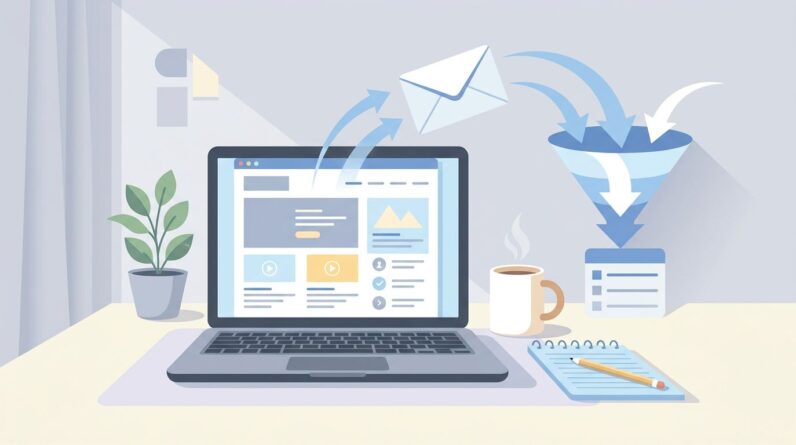
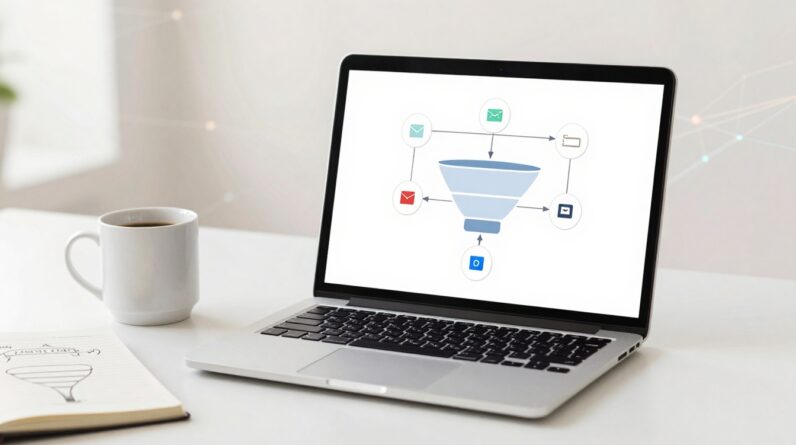
An email funnel is a step-by-step path set up to move subscribers from first noticing your brand to taking action. Think of it as a guided tour that leads prospects closer to what you want them to do, whether that’s making a purchase, signing up, or downloading something of value. Each email is written with a focus on where the subscriber is in their journey, answering questions, building trust, and nudging them forward without being pushy.
Key benefits of a clear email funnel:
- Builds a natural path for subscribers.
- Boosts trust by sending relevant messages at the right time.
- Increases conversions without spamming or annoying your audience.
Stages of an Effective Email Funnel
A strong email funnel has four basic stages. Each serves a different purpose and targets subscribers based on where they are in their relationship with your brand.
- Awareness: This is where people hear about you for the first time. Here, your emails introduce your brand, share your story, and offer helpful information. The goal is to catch their eye and keep them interested.
- Consideration: Now your subscribers know who you are. In this stage, you start building a deeper connection. Share success stories, answer common questions, offer value, and showcase what makes your product or service different.
- Conversion: This is the turning point. The focus shifts to nudging subscribers to take action. Use clear calls to action, limited time offers, or exclusive deals to make it easy for them to make a decision.
- Retention: The funnel doesn’t stop after the first sale. These emails keep the relationship strong with updates, tips, loyalty rewards, and requests for feedback. Loyal customers are more likely to come back and tell their friends.
Each stage works together, guiding subscribers forward in a way that feels personal and helpful, not forced.
Identifying Conversion Goals
To get real results, you need to know exactly what you want each funnel to achieve. Without a clear goal, your emails will feel scattered and hard to measure. Choose one conversion goal for each funnel, keep it simple, and focus every email on reaching that outcome.
Common email funnel conversion goals include:
- Getting subscribers to make a purchase.
- Encouraging sign-ups for a webinar or event.
- Prompting users to download a lead magnet (like an ebook or checklist).
- Driving traffic to a specific page.
To measure your success, track these numbers:
- Open rates: Are people even reading your emails?
- Click-through rates: Do your links or calls to action get clicks?
- Conversion rates: How many people acted after reading your email?
- Unsubscribe rates: Are you losing people at any stage?
Focus on the numbers that tie directly to your chosen goal. If your aim is more webinar sign-ups, then sign-ups matter most. If it’s about sales, track purchases. This keeps your strategy tight and your progress clear.
Set one main goal for each funnel and keep your message lined up with that target. This makes it easier to see what’s working, spot weak points, and get better results with every campaign.
Building Your High-Converting Email Funnel Strategy
Planning a high-converting email funnel isn’t just about firing off a bunch of messages. It takes a real understanding of your audience, careful mapping of every touchpoint, and the right tools to keep things smooth and smart. Let’s break down how to build an email funnel that draws people in, keeps them engaged, and brings real results—without complexity or confusion.
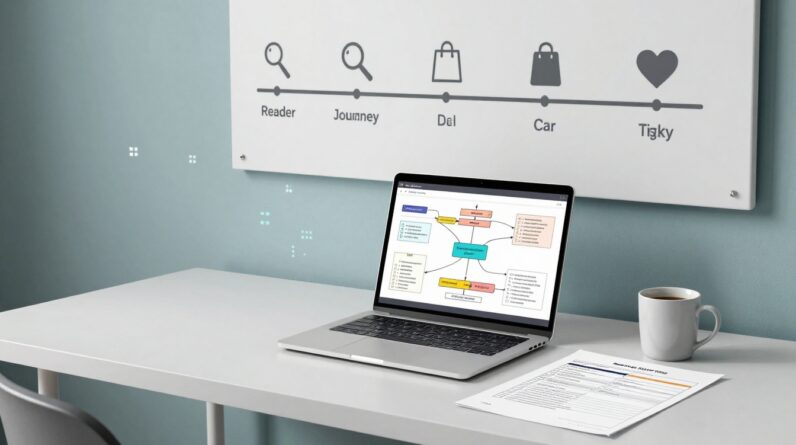
Mapping the Customer Journey
To guide someone from subscriber to customer, you need to see the path from their point of view. Start by defining who your ideal customer is. What problems bring them to you? What goals are they trying to meet? The more you understand their motivations at each stage, the easier it is to give them what they need.
Think of the customer journey in phases: awareness, interest, decision, and loyalty. At each phase, your subscriber is asking different questions and weighing different choices.
- Awareness: They’re just learning about you. Keep things simple and offer helpful tips or resources.
- Interest: Now, they’re curious. Share proof (like case studies or testimonials) that you solve problems like theirs.
- Decision: They’re almost ready to buy. Highlight what makes you stand out, and offer an incentive to take action.
- Loyalty: After the sale, follow up. Offer exclusive perks, helpful content, or ask for feedback.
Put yourself in their shoes as you plan content. Every email should move readers forward with clear, relevant information. Use plain language, friendly tone, and always tie each message to a real want or need.
Segmenting Your Email List for Personalization
Treating every subscriber the same way is a sure path to lower results. Segmentation lets you send the right message to the right person at the right time—so your emails feel helpful, not generic.
Start by looking at what you already know about your subscribers. Good categories include:
- Behavior: What did they click? Which emails did they open? Did they visit certain pages?
- Demographics: Age, location, job role, or industry can change what they care about.
- Engagement Level: Are they new, regular readers, or at risk of going cold?
Use this data to tag or group your list. For example:
- Send welcome offers to new signups.
- Share advanced tips with regular openers.
- Win back those who haven’t clicked in a while with a special deal or survey.
Segmentation can be simple. Even two or three groups can boost your open and click rates. Personalization shows you care and helps your messages stand out.
Selecting the Right Funnel Tools and Automation Platforms
Manually managing an email funnel isn’t realistic once you have more than a handful of subscribers. The right tools make your funnel smarter, faster, and easier to scale.
When shopping for email automation platforms, look for features like:
- Automation workflows: Build and visualize sequences that send the right email based on triggers like clicks or sign-ups.
- Segmentation support: Easily group users and target each segment.
- Responsive templates: Make your emails look great on any device.
- Integrations: Connect with your CRM, website, or other tools you use.
- Analytics: Check opens, clicks, conversions, and more to refine your strategy.
Popular platforms for all budgets include Mailchimp, ConvertKit, ActiveCampaign, and Klaviyo. Most offer free trials so you can try before you buy.
A smart funnel tool should save you time and boost your results. Set up your workflows, tweak as you learn, and watch your funnel do the heavy lifting—so you can focus on building stronger connections and growing your business.
Crafting Compelling Email Content That Converts
You have the strategy and the tools set up. Now, the real test begins: getting your emails opened, read, and acted on. This isn’t just about what you say, but how you say it. The right subject line can get your email noticed, strong body copy can keep subscribers reading, and a clear call-to-action (CTA) can turn interest into sales. Each part works together to pull the reader in and nudge them toward your goal.
Writing Irresistible Subject Lines and Openers
Think of your subject line as the front door. If your door feels inviting, people want to come in. If it looks dull or confusing, they walk past. Getting your emails opened starts with nailing that first impression.
Proven tips for writing subject lines that get clicks:
- Keep it short and snappy. Aim for 6-9 words. Most people check email on their phones, so shorter lines don’t get cut off.
- Spark curiosity. Hint at what’s inside, but don’t give it all away. Teasers make readers want to know more.
- Personalize where possible. Use the reader’s name or mention something specific. A simple “Hey [Name], quick question…” can outshine a generic blast.
- Put the best stuff first. Lead with the value, whether it’s a deal, answer, or solution to a pain point.
- Avoid spammy words. Words like “Free,” “Buy now,” and “Guarantee” flag spam filters or turn off readers.
- Test, test, test. Try a few different subject lines over time and see which get the best open rates.
Your email opener should follow up with the same energy. Connect with the reader in the first line—be direct, friendly, and tie back to the subject line. Avoid filler. A powerful opener can be as simple as, “You asked for [X], and I’ve got it for you.”
Designing Persuasive Email Body Copy
Once readers open your email, the next challenge is keeping their attention. Your email copy should be clear, easy to follow, and focused on benefits.
What makes email copy persuasive?
- Start strong. People skim. Lead with the key message in your first sentence or two.
- Keep paragraphs short. Use two or three sentences at most. This makes your content easy to scan.
- Focus on the reader, not yourself. Write “you” more than “we” or “I.” Make it about their needs, not your features.
- Use bullet points for clarity. Want to list features, benefits, or steps? Break them into bullets or numbered lists for quick reading.
- Add emotion where it fits. Tap into what matters to your readers—saving money, saving time, or solving a frustration.
- Always end with a clear next step. Guide the reader, so they never wonder what to do next.
Example:
Instead of, “Our software has a new update,” try, “You can finish work faster with our latest update—here’s how.”
Keep your formatting simple but smart. Use bold for important phrases, but don’t overdo it. Whitespace (blank space between paragraphs) keeps your email readable, even if it’s long.
Effective Call-to-Actions (CTAs) and Conversion Elements
Your CTA is the finish line. It tells your reader what to do next and should be impossible to ignore.
Tips for high-converting CTAs:
- Make it stand out. Use a button or colored text. Don’t let it blend with the rest of your copy.
- Be clear and specific. Instead of “Click here,” use “Download your free checklist” or “Start your trial now.”
- Limit to one main action. Too many CTAs confuse people. Focus your email on a single goal.
- Place CTAs strategically. Put your main CTA above the fold (where it’s visible without scrolling) and repeat it again at the end for longer emails.
- Use action verbs. Words like “Get,” “Reserve,” “Start,” and “Claim” drive readers to act.
For the best results, mix your CTAs with other conversion boosters:
- Add a short testimonial or review near the CTA.
- Highlight scarcity or urgency (e.g., “Only 3 spots left”).
- Use arrows, buttons, or color contrast to draw attention.
Smart CTA placement example:
- A button right after explaining a key benefit.
- Another link or button after a testimonial or quick FAQ.
- One summary CTA at the email’s close.
When you combine clear subject lines, sharp body copy, and action-focused CTAs, you turn basic messages into powerful conversion engines—making sure your email funnel does its job every single time.
Optimizing and Automating Your Funnel for Maximum Results
Email funnels need ongoing tuning to keep performing at their best. Once your funnel is up and running, don’t set it and forget it. Improving subject lines, timing, and sequence flow can turn a trickle of conversions into a steady stream of sales. Automation, when set up correctly, keeps your messaging sharp, your audience engaged, and your hands free for bigger tasks. Most of all, tracking the right data reveals what works, what needs fixing, and where your best opportunities lie. Let’s dig into the practical steps for better results.
A/B Testing and Optimization Tips
One of the quickest ways to boost your funnel’s performance is regular A/B testing. Testing lets you compare different versions of your emails to see what your audience actually prefers.
Start with these:
- Subject Lines: Try two distinct subject lines for the same message. One can be direct, and the other playful. Watch which gets more opens.
- Email Content: Test different introductions, body styles, or ways to highlight benefits. Check if a story-driven email works better than a list of features.
- Timing: Send emails at two different times (morning and afternoon, or weekday vs. weekend) to see when your readers are most likely to open.
A simple A/B testing checklist:
- Choose one element to test at a time (subject, copy, design).
- Split your list into two equal groups.
- Send each group a different version.
- Measure the results (open rate, click rate, conversions).
- Use the winning version as your new control and keep improving from there.
Be patient with your tests. Significant changes usually need at least a few hundred recipients to reveal the winner. Make A/B testing part of your routine. It’s like fine-tuning a recipe until you get it just right.
Automating Sequences and Personalization at Scale
With a strong strategy, automation feels like a secret weapon. It sends timely, relevant, and personal emails without any manual work, keeping subscribers happy and engaged.
Here’s how you can set up smarter, more personal automations:
- Welcome Series: Trigger an automated series the moment someone signs up. Give a warm welcome, introduce your brand, and offer a starter resource.
- Behavior-Based Triggers: Send different follow-ups based on how readers engage. If they click a link, send more details; if not, offer a different tip or incentive.
- Personalization: Go beyond using the recipient’s name. Reference last purchases, highlight the products they browsed, or mention locations if relevant.
Tips for scaled personalization:
- Tag subscribers by interests or actions inside your email platform.
- Create dynamic content blocks that show different images or messages based on user data.
- Set up “if/then” rules to automatically move people into more relevant email sequences.
Automation should always feel human. The best email funnels sound friendly, answer real questions, and reach readers when they’re most interested—not just when it’s convenient for you.
Tracking Metrics and Measuring Funnel Success
To sharpen your funnel, you need to look at the numbers that matter. These metrics are the dashboard for your funnel’s health.
Key email funnel metrics:
- Open Rate: Shows how many people are interested enough to open your email.
- Click-Through Rate (CTR): Tracks who clicks on your links or buttons. High CTR means strong copy and relevant offers.
- Conversion Rate: Measures how many readers followed through and took the final step (bought, signed up, downloaded).
- Bounce Rate: Reveals problems with your list quality or email settings.
- Unsubscribe Rate: Tells you if people are losing interest or find your emails irrelevant.
Here’s what to do with these numbers:
- Low open rate? Tweak your subject lines. Test new angles or try a different send time.
- Low CTR? Rework your CTA and body content. Make actions clear and benefits stronger.
- Low conversions? Look at your offer and landing page. Make sure the next step is simple, valuable, and matches your email’s promise.
- High unsubscribe rate? Review your frequency and relevance. Send fewer, more targeted emails.
Regularly review your reports to spot trends. If you find drops at a certain stage, that’s where to dig in and adjust. Use insights from every campaign to get better over time—like training a muscle, your funnel gets stronger with smart, steady work.
Remember, optimizing and automating your funnel doesn’t have to be complicated. Small, consistent tweaks based on real data can bring huge improvements while letting you focus on the bigger picture.
Conclusion
Building an email funnel that truly converts isn’t rocket science, but it does take focus and a bit of patience. Map your customer’s path, personalize your messages, and use automation to keep things running smoothly. Pay attention to what works, test often, and stay open to making small tweaks for big wins.
If you’re ready to get results, start by sketching out your funnel stages and choosing one clear goal. Set up your first automation, write those welcome emails, and send them out. Every improvement moves you closer to a steady stream of happy, engaged subscribers who buy and stick around.
Thanks for reading—jump in, put these tips to use, and watch your email funnel start working for you. If you have a tip or story to share about your own wins (or struggles), leave a comment below. Your feedback helps everyone get better. Keep an eye out for more step-by-step tips in upcoming posts!