Cold traffic is a little like meeting someone at a party.
They don’t know you, they don’t trust you, and if you shove an affiliate link in their face, they’re gone.
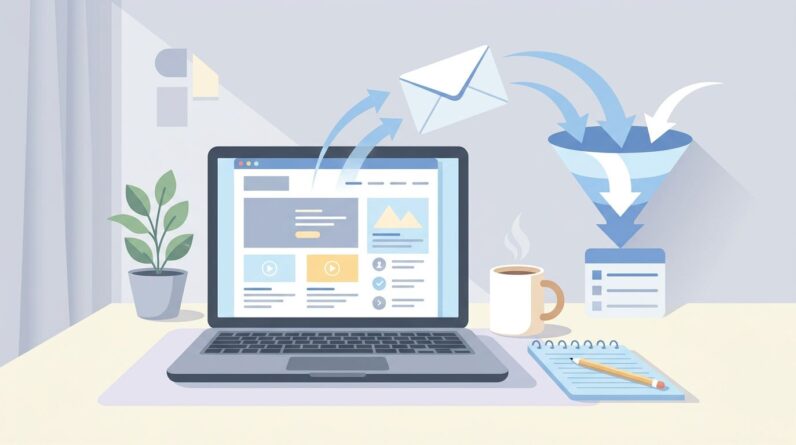
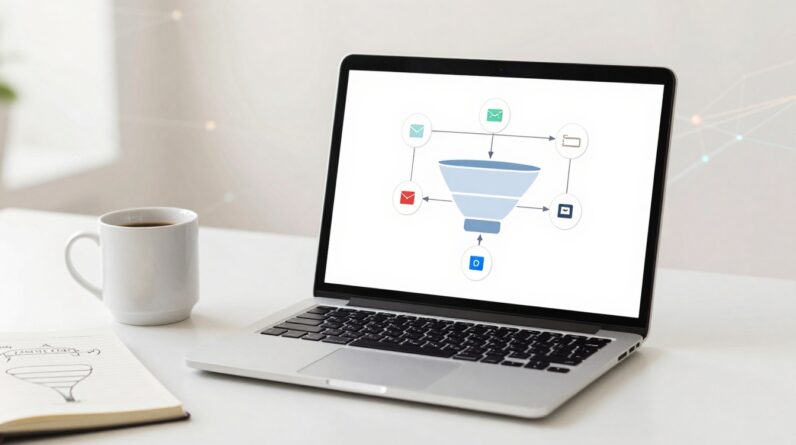
A ConvertKit affiliate funnel fixes that by giving cold clicks a clean path: opt in, get a quick win, see proof, then get a simple offer that fits what they already raised their hand for.
The goal is not to “warm them up” with endless emails.
The goal is to move them from curious to confident, using a short system you can run every day without babysitting it.
Start with one promise and one person
Cold traffic doesn’t need more choices, it needs clarity.
Before you open ConvertKit, lock in these two things:
Your person: Who is this for, and what are they trying to fix right now?
Your promise: What result can you help them get in 15 to 30 minutes?
A strong promise looks like “set up your first landing page today” or “pick a niche in one sitting”, not “learn affiliate marketing.”
If your affiliate product doesn’t directly support that promise, pick a different angle or a different offer.
Use a bridge step instead of pushing the offer
Cold traffic almost never buys on the first click.
That’s why the “bridge” concept works: you add a step between the ad or post and the affiliate link.
A good bridge step is usually one of these:
- Lead magnet: checklist, short template, swipe file, quick video
- Bridge page: a page that frames the problem, shares your story, and points to the next step
- Email sequence: where you build trust and give context before the pitch
If you want a deeper explanation of the bridge approach, this breakdown of a bridge funnel is a useful reference, even if you’re building the emails inside ConvertKit.
Build the ConvertKit entry point (form, page, and tags)
Now you can open ConvertKit and set up the “front door.” Keep it simple and make it fast.
1) Create a landing page that matches the click
Your headline should mirror the exact promise that got the click in the first place. If your ad says “free 7-day meal prep plan,” your landing page headline should not say “join my newsletter.”
Also, reduce friction:
- Ask for first name only if you truly use it, otherwise email only
- Add 2 to 4 bullets that describe what they’ll get
- One call to action, one job
2) Add a tag that tells you where they came from
Tags are your memory.
Cold traffic needs context, and tags keep you from sending the wrong pitch later.
Examples:
Tag: Cold-IG-Reel-LeadMag1
Tag: Cold-YT-Description-Checklist
Tag: Cold-Pinterest-Template
If you run multiple traffic sources, these tags become your scoreboard.
3) Set a clean confirmation experience
If you use double opt-in, your confirmation page should tell them what to do next in one sentence.
If you use single opt-in, redirect them to a “thank you” page that sets expectations (and introduces you like a real person).
Write a welcome sequence that earns attention fast
Cold subscribers scan your emails like they scan a menu. They’re looking for one reason to keep reading.
A practical welcome sequence for cold traffic is 4 to 6 emails over 5 to 8 days. Each email has one point.
Here’s a structure that works in many niches:
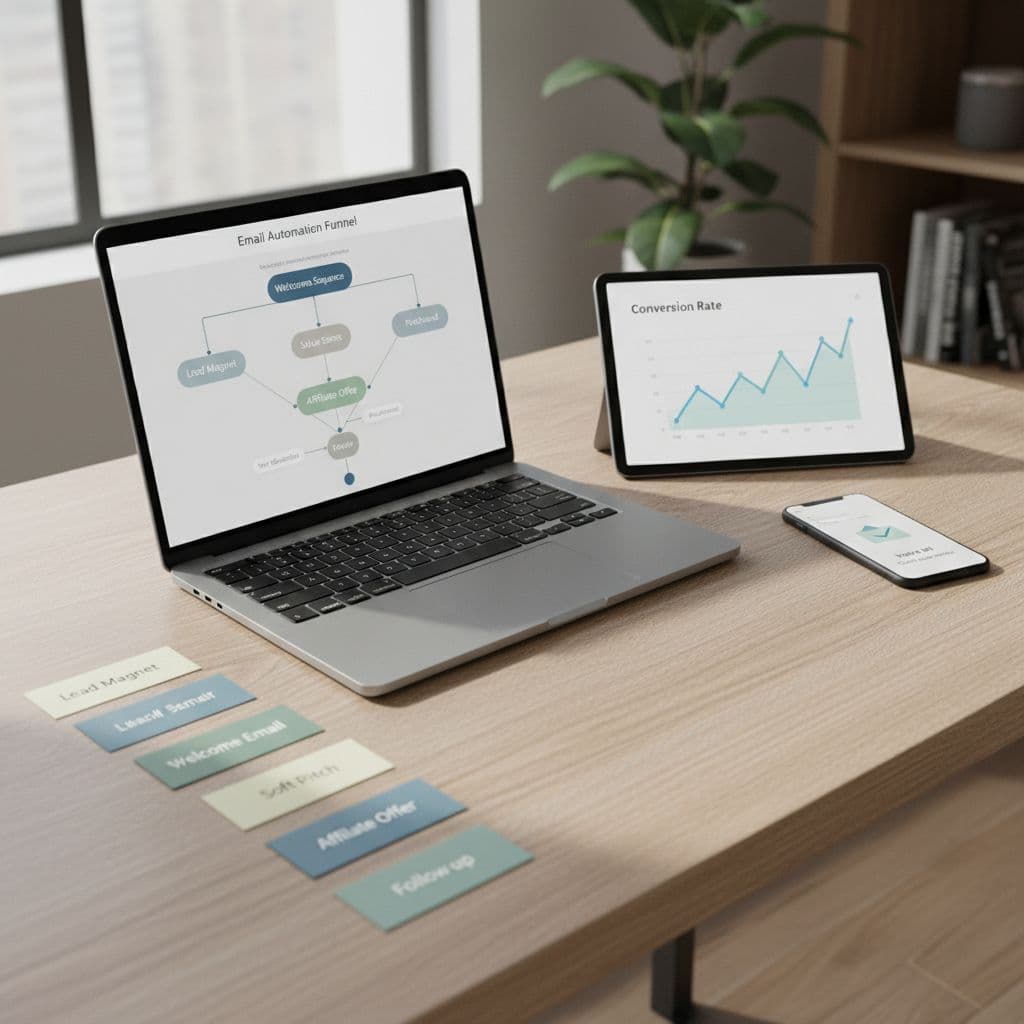
Email 1 (immediate): Deliver the lead magnet, set expectations, one small win they can get today.
Email 2 (day 1): The “why this matters” email, share a mistake you made, and what changed.
Email 3 (day 3): Teach the core idea, add a quick example, and point them to a helpful resource.
Email 4 (day 5): The soft pitch, introduce the tool or program and who it’s for.
Email 5 (day 7): Objections, answer 3 common worries, then offer again.
If you want to see how an evergreen funnel can be set up inside ConvertKit, this guide on an evergreen sales funnel with ConvertKit gives helpful context for sequencing and timing.
Make the affiliate pitch feel like a next step
The pitch is where many funnels break.
Not because the product is bad, but because the pitch feels random.
Your pitch should connect to what they already did.
A simple way to write it is:
Problem: “You’ve got X, and that’s why Y keeps happening.”
Bridge: “Here’s the approach that fixed it for me.”
Offer: “If you want the tool that makes it easier, here it is.”
Boundary: “If it’s not a fit, do this free step instead.”
Two tips that raise conversions without sounding salesy:
- Use one main call to action (one link, one path).
- Add proof without hype: your experience, a small result, or a clear reason you trust it.
If the program has an official page with claims you can’t verify, don’t repeat those claims.
Stick to what you can honestly say.
Set up ConvertKit automation that keeps things tidy
ConvertKit shines when you keep the logic simple and readable.
Think “if they do this, send that.”
A clean cold-traffic automation usually needs:
Trigger: Subscribes to Form A (cold lead magnet)
Action: Add tag “Cold-Source-Name”
Action: Start Welcome Sequence
Condition: If clicked affiliate link, tag “Clicked-Offer”
Condition: If purchased (if you can track it), tag “Customer” and stop promos
If you can’t track purchases (common with many affiliate programs), link-click tagging is still helpful.
Someone who clicked is telling you they’re interested, even if they didn’t buy today.
Track the numbers that matter (so you don’t guess)
You don’t need a giant spreadsheet.
You need a few signals that tell you where the leak is.
Watch these first:
- Landing page opt-in rate: if it’s low, your promise or page is off
- Open rate on email 1 and 2: if it’s low, your subject line and first line need work
- Click rate on the pitch email: if it’s low, the offer fit or framing is off
A helpful mindset: treat your funnel like a simple plumbing system.
One clog can slow the whole thing, so you fix the tightest spot first.
For extra examples of how affiliate funnels are structured, this overview of how to build an affiliate funnel that converts can spark ideas for your own flow and messaging.
Keep trust high (and stay compliant)
Cold traffic has its guard up.
If you want long-term sales, trust has to stay intact.
Do these basics every time:
- Put a clear affiliate disclosure near your links.
- Don’t promise results you can’t control.
- If you mention pricing, be ready for it to change and avoid stating “exact” numbers unless you update often.
Trust compounds.
It also breaks fast.
Final takeaways for a ConvertKit affiliate funnel that sells
If you want cold traffic to convert, give it a path that feels natural: one promise, one opt-in, a short welcome sequence, then a clear offer that fits the original problem.
Build your automation so tags tell the story, and your emails do one job at a time.
Your next step is simple: pick one lead magnet, write the first two emails today, and get your ConvertKit affiliate funnel live so you can start learning from real clicks.