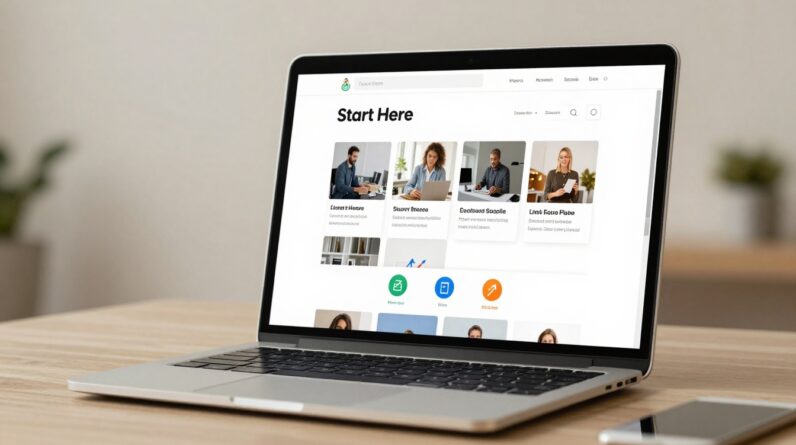
If your site has more than a few posts, new readers can feel like they walked into a warehouse with no signs.
They’re interested, but they don’t know where to go first, and that uncertainty kills clicks.
A start here resource page fixes that.
It’s your front desk, your guided tour, and your “best of” shelf in one place.
Done well, it can rank for beginner-friendly searches, move readers into your money pages, and save you from answering the same questions in DMs every week.
Why a start here resource page works for affiliate income
A start here page isn’t a random list of links.
It’s a promise: “You’re in the right place, and here’s the fastest path to results.”
That promise matters in affiliate marketing because most people don’t buy on the first click.
They need context, proof, and a little confidence.
Your start here page gives them a simple path, while quietly stacking the trust that makes your recommendations feel safe.
It also acts like a “hub” that points to your best supporting pages.
When you keep it focused, it can become a page you build internal links to again and again, which helps it stay visible in search.
If you need a baseline affiliate workflow to reference while building your hub, use a beginner-friendly guide like WPBeginner’s affiliate marketing guide to sanity-check that your steps match how people actually start.
Pick one reader path, then build the page around it
Most start here pages fail for one reason: they try to serve everyone.
Choose one primary reader type and one primary outcome.
For entrepreneurs, a strong “default” outcome is usually “make your first consistent commissions without wasting time.”
Write a one-sentence target for the page, then build everything under it. Example:
Your goal: “Help a beginner go from zero to their first affiliate clicks and commissions, using my proven content path.”
Now your filter is simple.
If a link doesn’t help that reader move forward, it doesn’t belong on this page.
A quick way to sort your content into the right buckets
Think of your start here page like a gym plan.
New members don’t need every exercise, they need a short program they can follow.
Pick 3 to 5 buckets that match the order people learn.
These work well for affiliate sites:
- Start with the basics (what affiliate marketing is, how you pick offers)
- Get traffic (SEO content, YouTube, social, whichever you actually teach)
- Convert (reviews, comparisons, email follow-up)
- Tools I use (only what you can stand behind)
- Get personal help (newsletter, free guide, consult, course)
Keep those bucket names plain.
Clarity beats clever.
A page layout that ranks, earns, and feels helpful
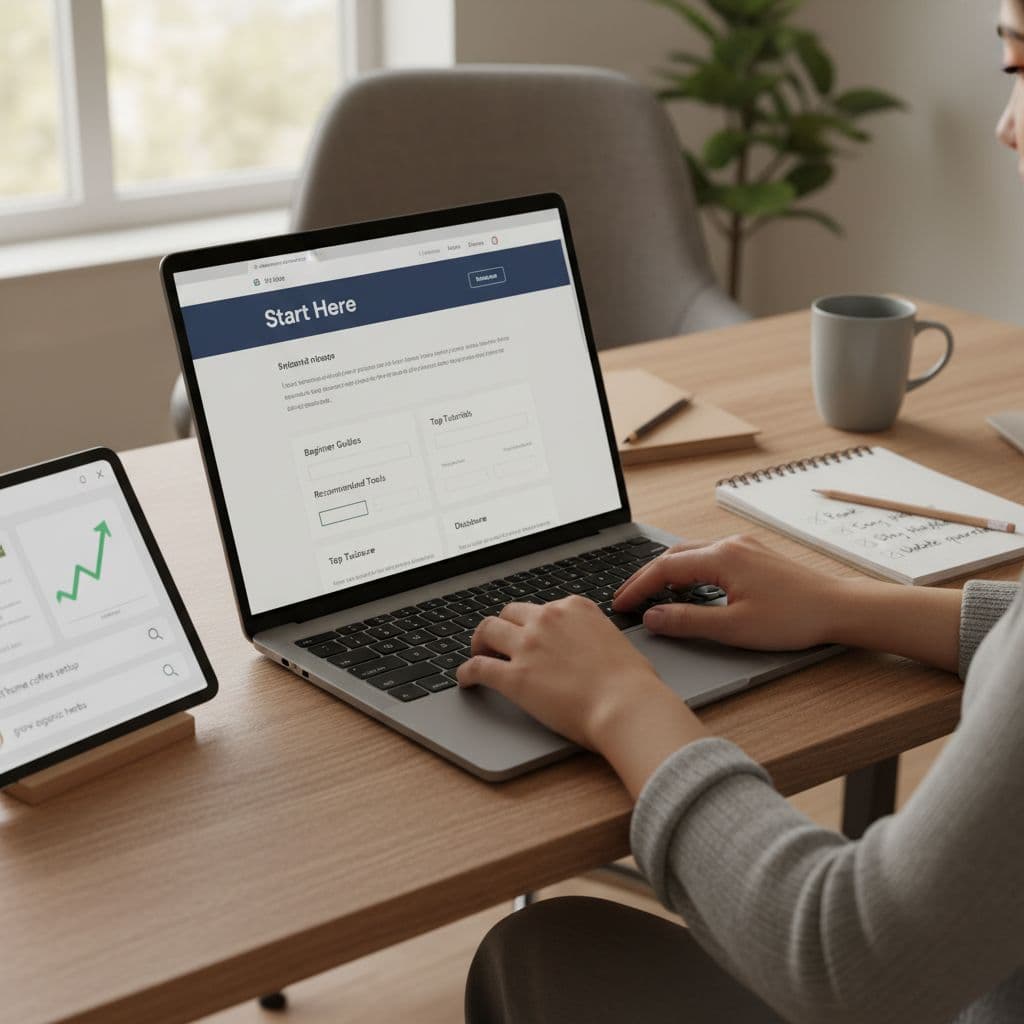
Here’s a structure you can copy without turning your page into a wall of links.
1) Above the fold: who it’s for, what to do next
In the first screen, do three things:
- Say who the page is for (one sentence)
- Say what result they can expect (one sentence)
- Give one clear next step (one button)
Your button should go to your best “first step” post, not your homepage.
If you have a strong beginner roadmap, link it.
For example, you could point readers to How to earn $500 in 30 days with affiliate marketing if that matches your promise and audience.
2) A “start here” sequence: 3 links in a set order
This is your guided path.
Think: “Read these in order.”
Keep it short. Three links is enough to create momentum:
- One beginner explainer (affiliate basics)
- One “pick your offer” post (how you choose and validate)
- One “first content” post (what to publish first)
If you have a category or tag page built for beginners, link it as the “library” after the sequence, like Getting started with affiliate marketing.
3) Your highest-converting resources, grouped by problem
Now you can add a few more links, but organize them by what the reader is trying to solve.
Use mini blurbs (2 sentences) above each group so the page reads like guidance, not a directory. Example groups:
- “If you want faster buying intent, start with comparisons and ‘best’ lists.”
- “If you want trust, start with tutorials and ‘how I use it’ posts.”
This is also where you can add one external “training” resource if your audience needs it.
A solid option is a step-by-step video like Affiliate Marketing Tutorial For Beginners 2025 (Step by Step), especially if you know your readers learn better by watching than reading.
4) Recommended tools (with honest guardrails)
Tools can earn well, but they can also wreck trust if you recommend everything.
A clean approach is:
- List 3 to 7 tools you actually use (or would use if you were starting again)
- Say who each tool is for (one line)
- Link to your full review or tutorial if you have it
- Add one plain disclosure line at the top of the section
If you promote ClickBank offers, it can help to point new affiliates to a neutral learning hub like the ClickBank Affiliate Resource Center so they understand the basics before they start grabbing random links.
Write the page like a coach, not a brochure
A start here resource page earns because it reduces decision stress.
Your tone should match that job.
Use simple coaching lines like:
- “If you’re brand new, start here.”
- “If you already have traffic, do this next.”
- “If you’re stuck, read this one.”
And don’t hide the money part.
Just be direct about it.
A short disclosure near the top (and again near tool links) sets expectations and keeps you on the right side of platform rules.
Keep the page helpful so it keeps ranking
A start here page is a living page.
Treat it like a storefront window, not a museum.
Here’s a maintenance rhythm that doesn’t eat your calendar:
- Quarterly check (30 minutes): click every link, remove broken ones, swap outdated tools.
- Monthly tweak (10 minutes): add your newest “best” post if it truly belongs.
- After big site changes: update any renamed URLs right away.
Also watch for this quiet problem: you add new posts, but your start here page still sends people to older content that no longer matches your current recommendations.
If your best advice has changed, your hub should change with it.
Final takeaways for a start here resource page that earns
Your start here resource page should feel like a calm hand on the shoulder: “Do this next, then this, then this.”
Keep the promise narrow, keep the path short, and keep the recommendations honest.
If you build it like a guided route instead of a link dump, readers will stay longer, click deeper, and come back when they’re ready to buy.
Now pick your three starter links, write the above-the-fold copy, and publish it today. Your future content can orbit around it.